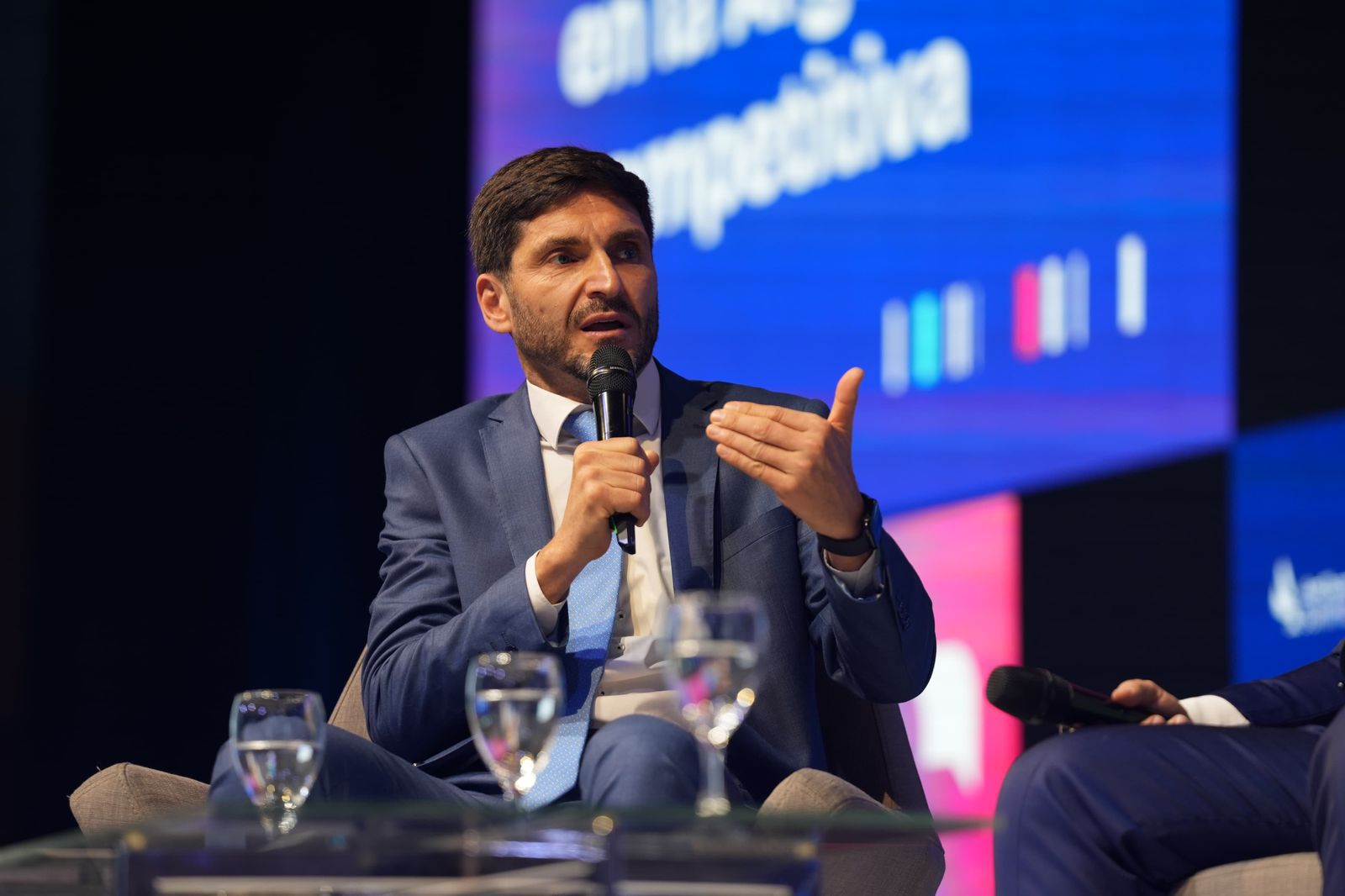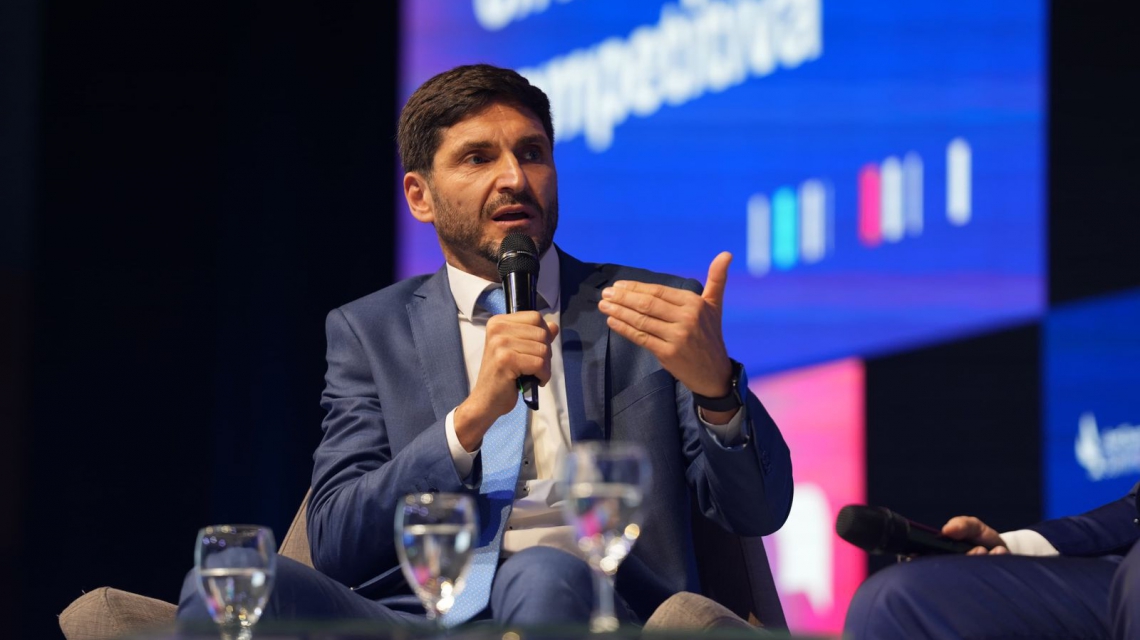
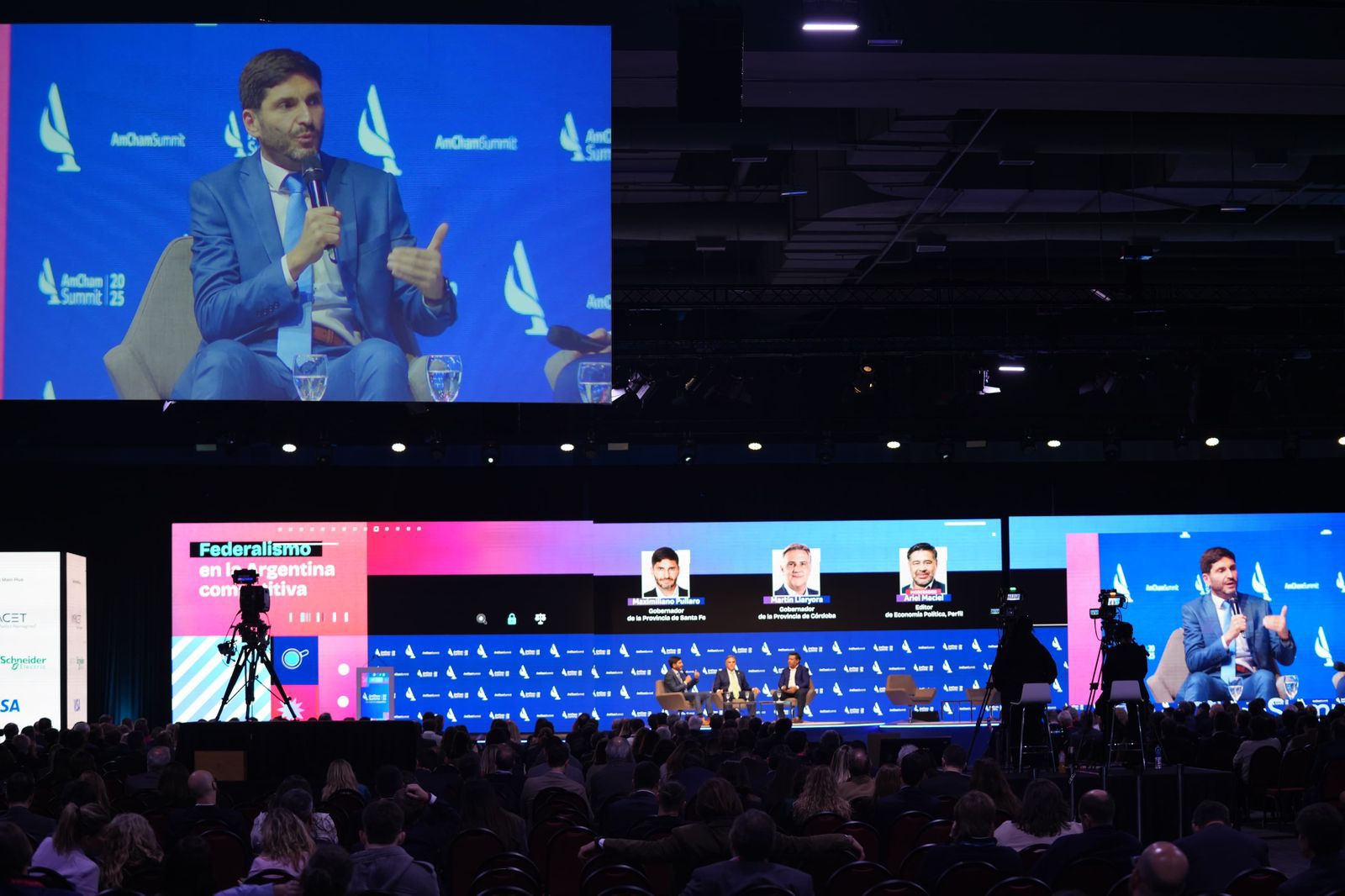
The Governor of the Province of Santa Fe, Maximiliano Pullaro, participated this Tuesday in the AmCham Summit 2025. Organised by the United States Chamber of Commerce in Argentina, this event brings together important public and private sector leaders under the theme "A Competitive Argentina".
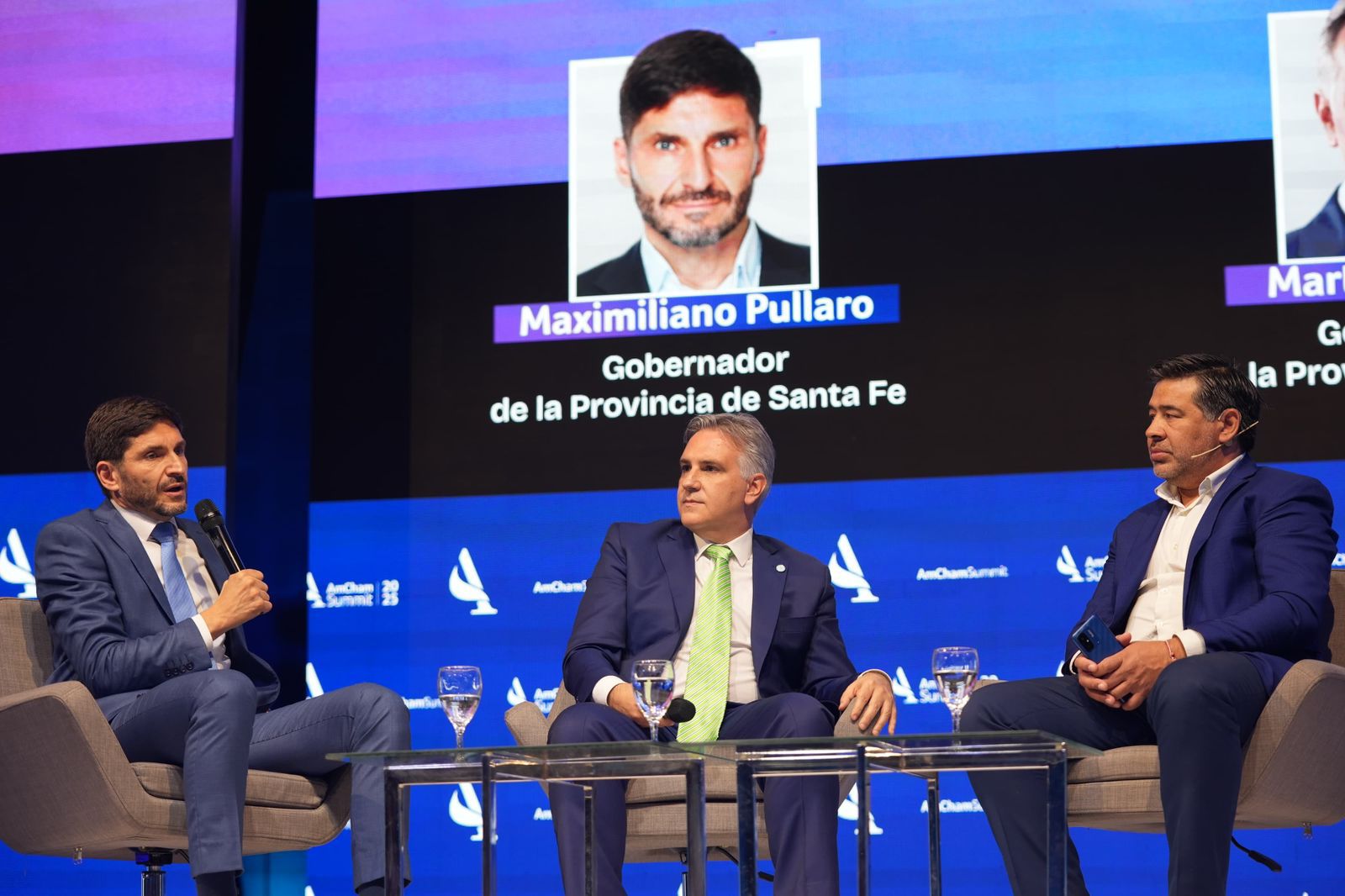
During the activity, held at the Buenos Aires Convention Center, Pullaro participated in the panel "Federalism in a competitive Argentina", together with his counterpart from Córdoba, Martín Llaryora, and the moderation of journalist Ariel Maciel.
In this context, the governor of Santa Fe stated that "the discussion is about federalism, in its different levels and how we defend it. In Santa Fe we continue to provide services and for that we had to demonstrate that we could have higher levels of efficiency and effectiveness in the administration of public resources. We believe that the reordering of the macro-economy is correct, and we are enthusiastic about it". "The fall in inflation, country risk and interest rates bring stability and boosts investment. But what is missing in our country," he added, "is a look at the productive system as a whole and how we can make our companies more competitive in order to generate more jobs. That is where we all have a task to do".
The allocation of resources by the government versus what remains within the province.
In this sense, Pullaro exemplified that "of a $10,000 purchase at the supermarket, a Santa Fe resident has only $200 in provincial taxes and $1,800 in national taxes. But when he leaves the supermarket, he finds a Santa Fe police car, if he has an accident he will have an ambulance and if he has children they will be able to go to a school supported by the provincial government. Now it is very difficult to know what service the national government provides because of the taxes it collects. Until two years ago, every $100 we contributed, $57 came back to our province. Now $49 is coming back to our province."
“The challenge ahead of us is to discuss the tax matrix, which in our provinces is extremely low. Another challenge is to improve our logistics and our roads because there is no investment. The provincial government is investing in sustaining the national roads in Santa Fe because they are in very bad condition. We are investing in the development of our technology, making gas pipelines, extending our electricity grid to give more power to our industry and connectivity. These are the challenges that exist now and that we in Santa Fe and the Central Region want to discuss," said the governor.
Productive development
On the other hand, Pullaro also referred to the waterway and said: "We are enthusiastic about the new debate that is taking place. We have to discuss the transfer, the beaconing and the cost, but also a productive development project for Argentina that enhances and lowers the cost of logistics and that looks to the interior of the territory. We need to improve our infrastructure. We feel that this is an opportunity that has to be contemplated in the macro debate that should be the debate for the waterway and not only refer to the Paraná River corridor but also how we develop it and strengthen the road infrastructure".
"No matter how much effort the provinces make, it is very difficult. We are supporting the road system but our province has 0 pesos left over from exports. However, Santa Fe invests to sustain the roads and as it has a problem with the national roads we asked the government to cede them to us to take care of that. This did not happen either. Now we are working to achieve corridors through the Port of Timbúes and the Port of Constitución that will allow us to have a greater flow of trucks arriving at the port. The debate is not only about the river, but also about the productive infrastructure", concluded the governor.
AmCham Summit 2025
The event aimed to promote a space for open and collaborative dialogue to discuss and define the strategies needed to enhance the country's economic and social development. Different panels throughout the day analysed the bilateral relationship between Argentina and the United States, the role of the private sector in job creation, energy security, freedom of expression and federalism for a competitive Argentina, among others.