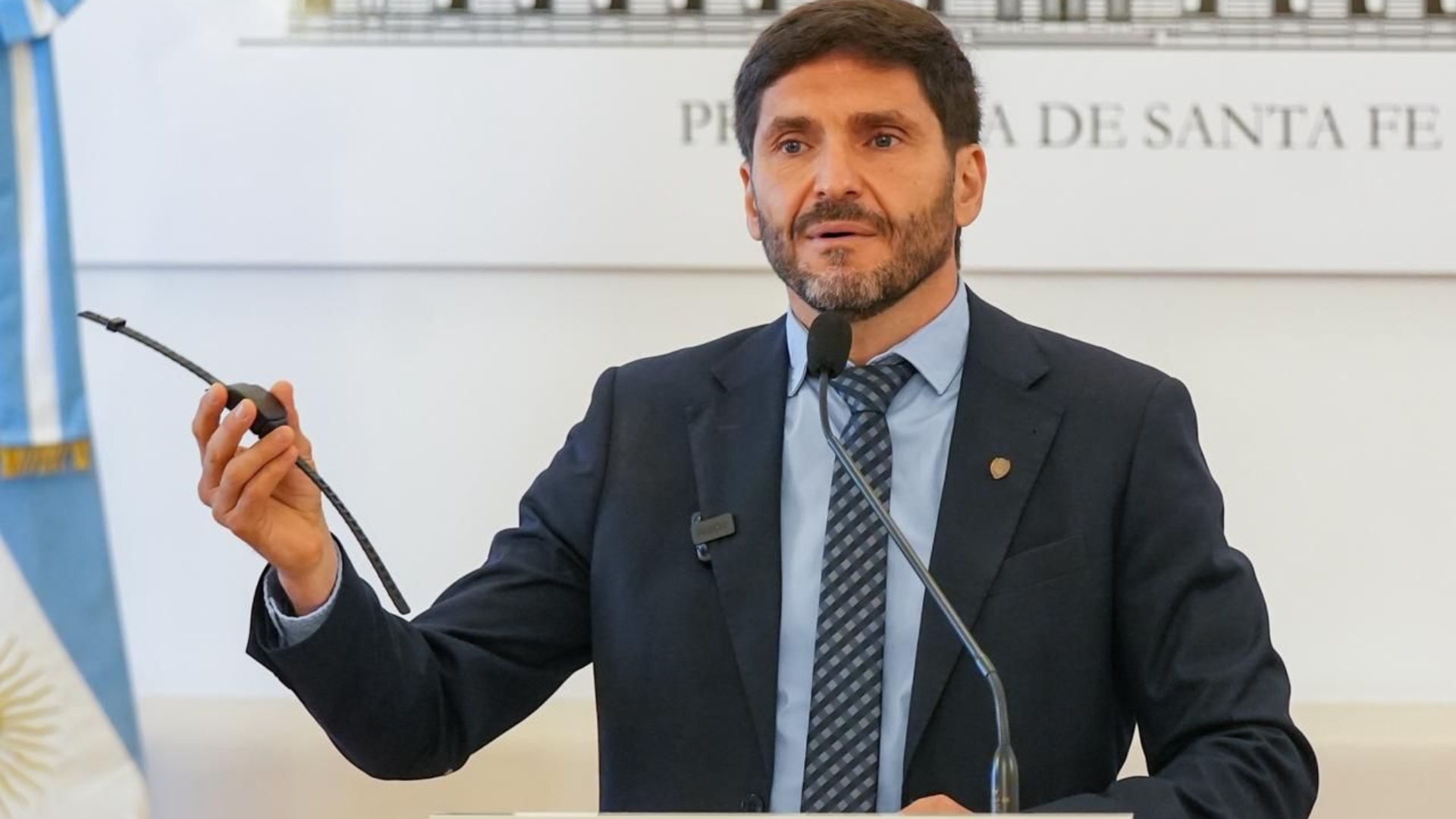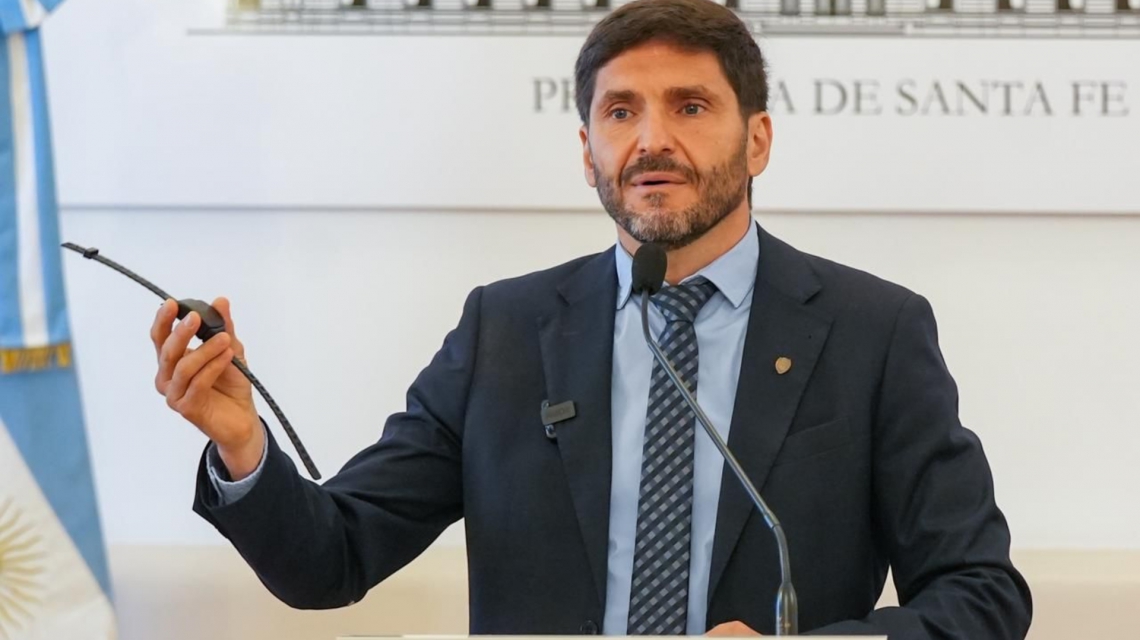
More than £1 million was invested in the purchase of the ankle bracelets and monitoring equipment, the main difference with other devices being that the responsibility now lies with the aggressor. "These devices represent a provincial investment of almost $1.5 billion, in addition to maintenance and upkeep, which costs $688 per month, and those that are home-based, which cost around $600 per month. This means that the provincial government will be allocating a lot of resources each month to ensure that this device can function properly," said Pullaro during the presentation in the White Room of the Government House.
Paradigm shift
"This is not just a public investment, but part of a public security system coordinated with the Public Prosecutor's Office and the Ministry of Equality and Development," said the governor, who also acknowledged that "this action could not be carried out if we did not currently have the same level of police and operational deployment as we have in large cities, which allows us to treat every case of a woman being a victim of gender-based violence or a person being a victim of domestic violence as a priority incident, with the police arriving on the scene in less than five minutes."
Pullaro appreciated that with the incorporation of these devices, "the paradigm changes because the aggressor will be the person wearing the ankle bracelet and the device that geolocates them, and this will be monitored 24 hours a day by police personnel on 911 duty, who will be able to see on the monitor that an aggressor is approaching the victim, so they will be responding to that case at that precise moment." At the same time, he acknowledged that "we are not revictimising the victim, but rather we will be constantly monitoring the aggressor."
The presentation was also attended by the Ministers of Justice and Security, Pablo Cococcioni, and Equality and Human Development, Victoria Tejeda, together with the Attorney General of the Public Prosecutor's Office, Maria Cecilia Vranicich; the Secretaries of Women, Gender and Diversity, Alicia Tate; Institutional Management, Virginia Coudannes; and Criminal Affairs, Lucía Masneri; the Provincial Director of Emergency Services, Pablo Polito; the Regional Prosecutor, Jorge Nessier; provincial authorities; the Santa Fe Police; and the Provincial Penitentiary Service.
Stopping violence against women
Vranicich stressed that the MPA "is working on establishing criteria for prosecuting femicides in the context of organised crime. We already have a track record, production and systematisation of information on femicides and violent deaths of women with a single registry in the province of Santa Fe." He recalled that "last year we had 30,000 cases opened for gender-based violence," while pointing out the consolidation of "the criminal prosecution of this type of crime because, along with highly harmful violence and illegal economies, it is one of our priority objectives."
How the devices work
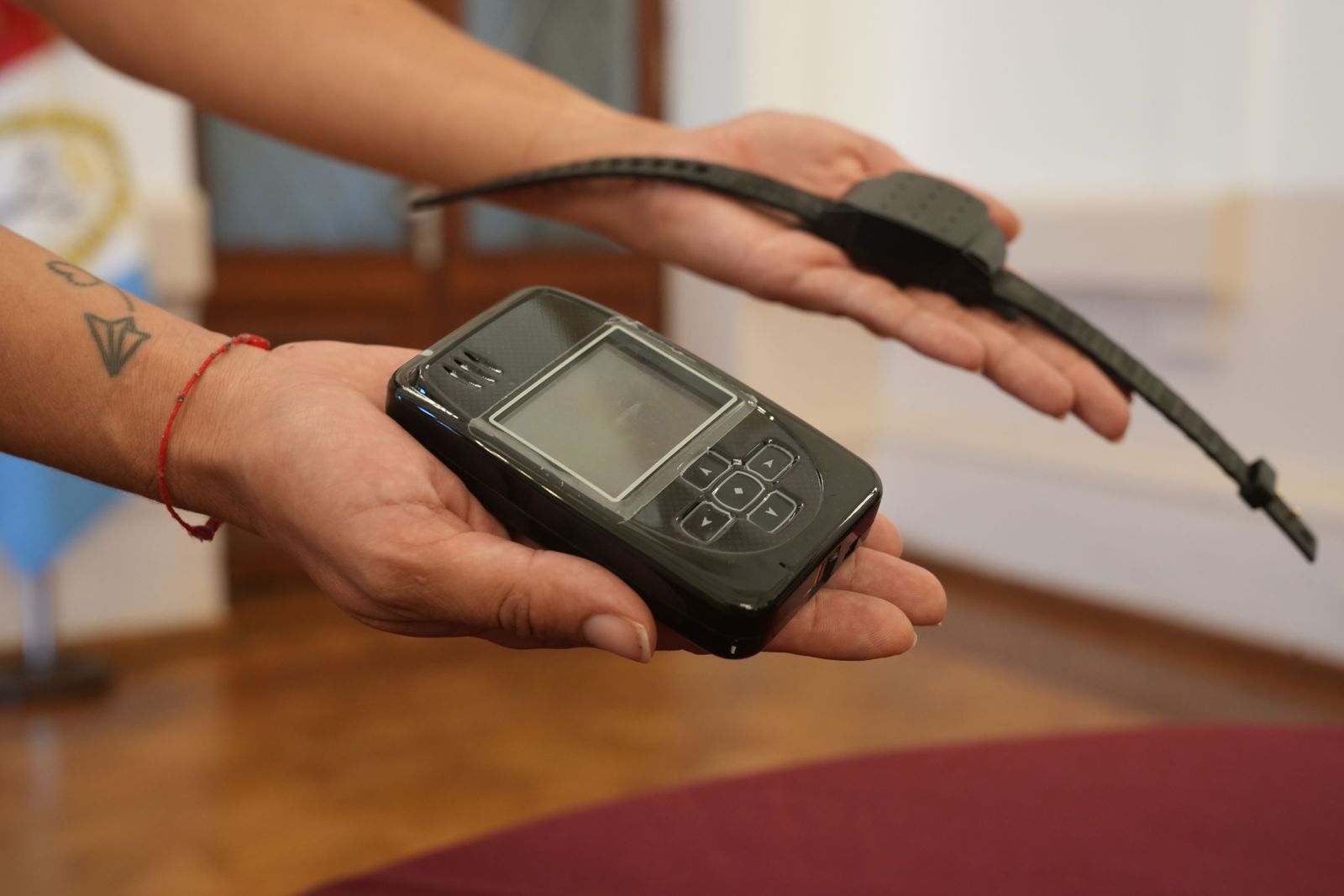
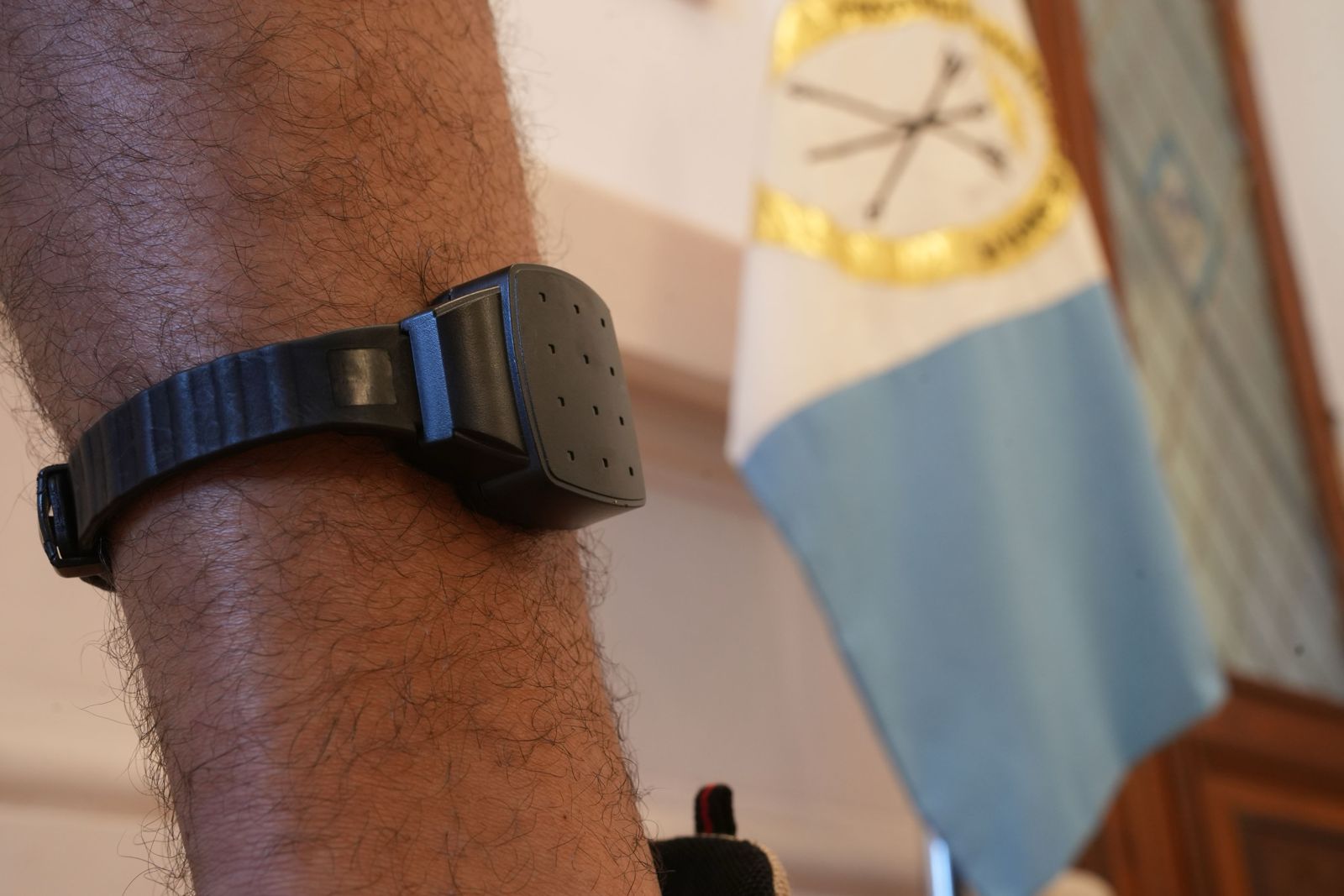
The devices consist of an electronic ankle bracelet and a tracker that will be worn by the perpetrator reported for gender-based violence. The victim will have a tracker similar to a mobile phone that will inform her if she is at home or going somewhere outside her home and the perpetrator is nearby, allowing her to take measures to protect her physical integrity.
They work using global satellite technology (GPS) and are monitored continuously by the 911 Emergency Centre. "What is new about this is that it will be through provisions made by the courts, exclusion zones will have to be respected, the aggressor will not be able to approach either the victim's home or workplace, and there will also be dynamic monitoring that will allow for an early police response," said Polito.