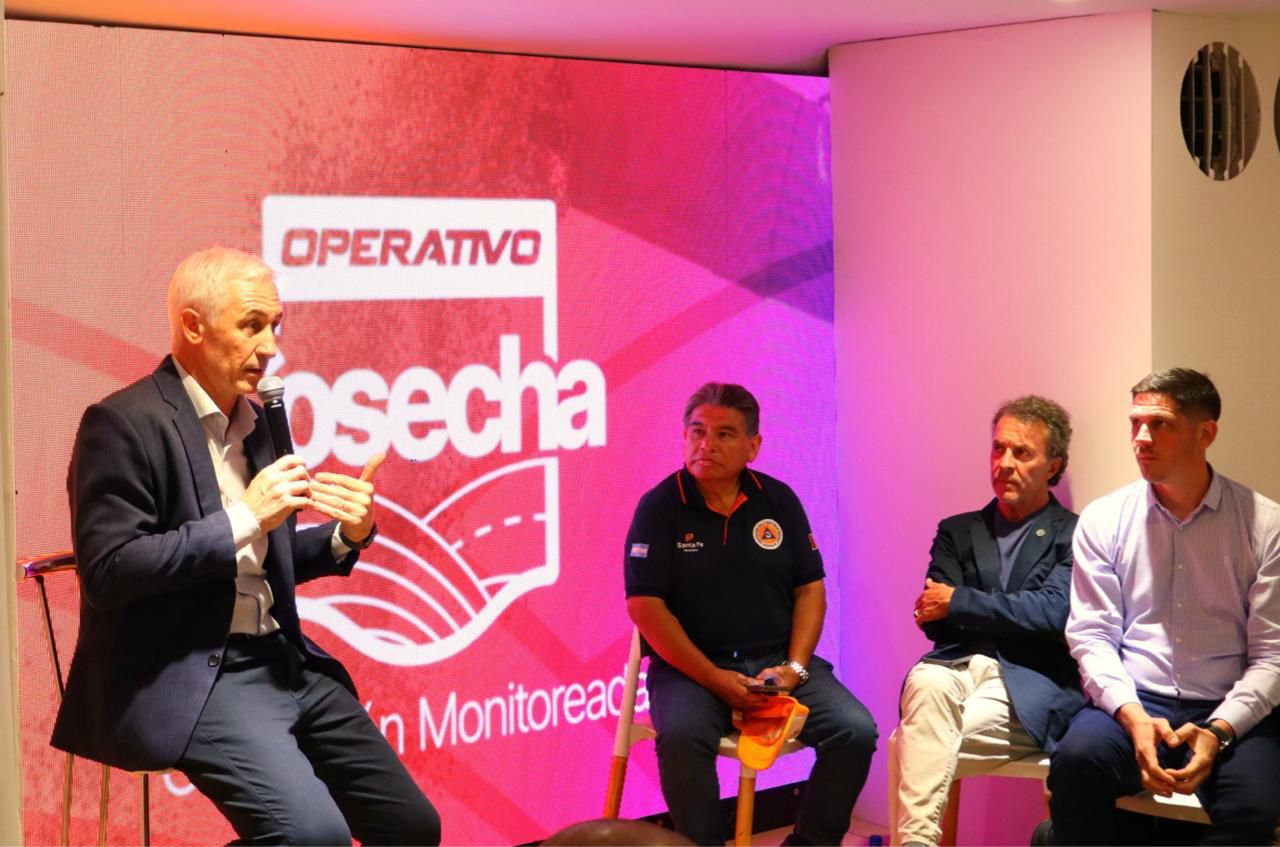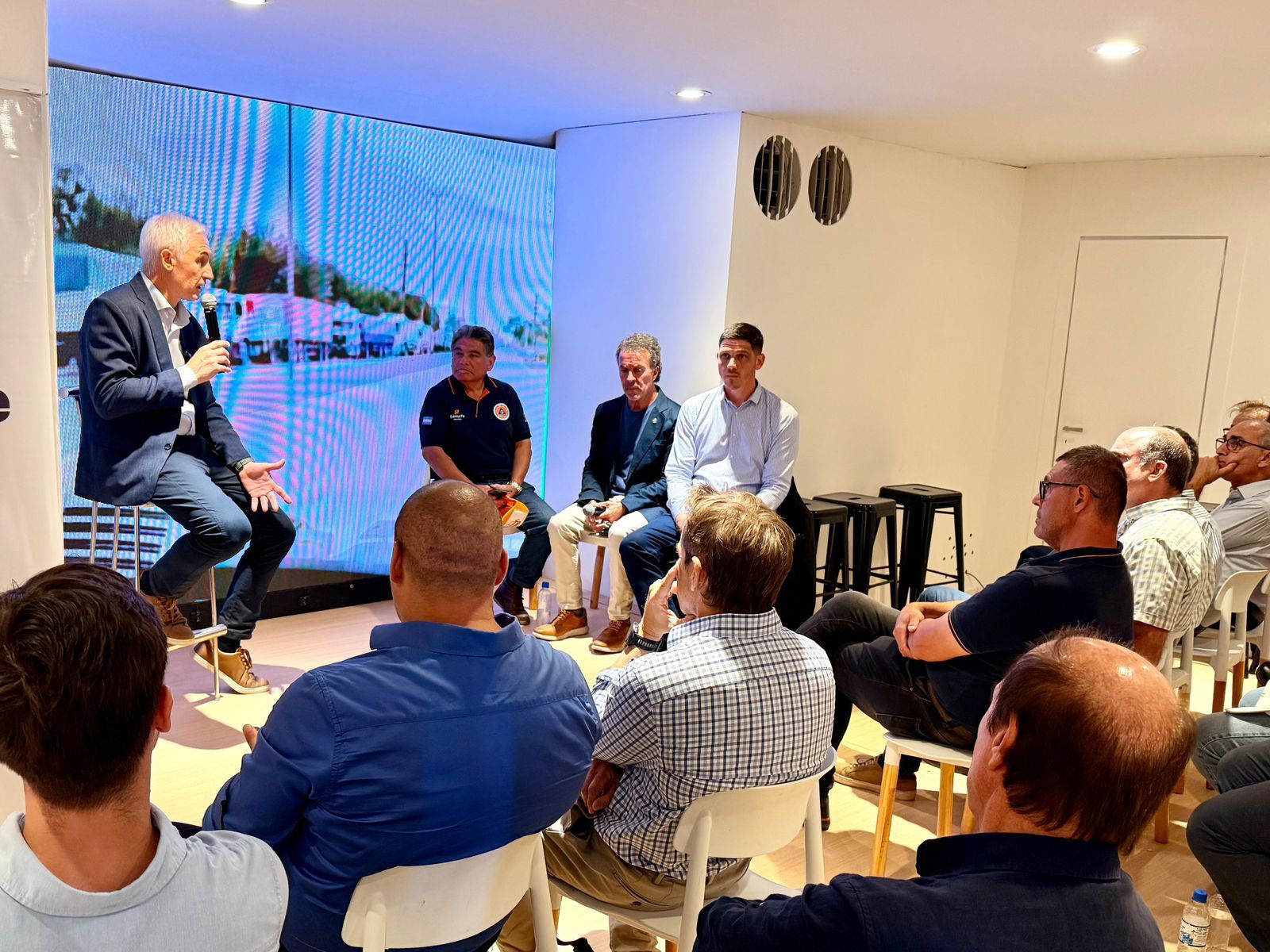
On Thursday, the Government of Santa Fe unveiled the Stop 5.0 smart access system at Expoagro, a new technological tool designed to manage the flow of lorries transporting grain to the ports of Greater Rosario during the agricultural season.
The initiative forms part of Operation Harvest 2026 and establishes mandatory time slots for lorries entering the port area, with the aim of regulating the flow of freight transport, improving export logistics and reducing congestion problems on roads and in towns near the terminals.
The system will come into effect on 16 March in an initial phase without penalties. From 15 April, full enforcement will begin, with fines imposed on those who fail to comply with their allocated time slots.
During the presentation, the Secretary for Cooperation of the Government of Santa Fe, Cristian Cunha, explained that the new platform represents an evolution of the previous system. “Stop 5.0 is an evolution of the existing Stop system. Today, almost two million lorries arrive each year at the port corridor, from Rosario northwards to Timbúes, and southwards to General Lagos. They all book a slot, but end up arriving at the same times,” he noted.
The official explained that, at the height of the main harvest, between 10,000 and 15,000 lorries gather in just six hours a day, a situation that causes safety issues, accidents and disruption for communities near the ports.
“We had to sort this out. Hauliers wait for many hours at the port perimeter, which leads to security risks, grain theft and road accidents, as well as the impact on the towns where the terminals are located,” he added.
Cunha also noted that, with this tool, the province is beginning to intervene directly in the organisation of transport flows to the country’s main export hub. “This is the first time that Santa Fe has had a say in the entire flow of lorries arriving at the ports located within its territory. We are now adding an entry schedule to the quota system, which will allow waiting times to be spread out at the points of origin rather than being concentrated for 14 or 15 hours at the port perimeter,” he explained.
Providing predictability
For his part, the director of the Provincial Road Safety Agency, Carlos Torres, emphasised that the new scheme aims to provide predictability for hauliers and reduce the time spent on roads near terminals.
“We want the lorry driver to arrive at a set time, to know that up to two hours beforehand they can enter the final 30 kilometres leading to the ports, unload and leave quickly. During the first month, the system will be educational in nature: there will be no penalties, but rather a process of information and adaptation,” he said.
Meanwhile, the provincial director of Civil Protection, Marcos Escajadillo, highlighted that Operation Harvest involves coordinated work between the provincial government, municipalities, local authorities and sectoral bodies.
“At Civil Protection, we coordinate all emergency response activities in the province and, in this case, Operation Harvest 2026 is being carried out with the participation of provincial agencies, local governments, transport unions, the Federation of Argentine Transporters (Fetra), the Chamber of Exporters and various stakeholders in the logistics chain,” he noted.
The official explained that the main aim is to ensure both the safety of hauliers and the smooth running of the towns and villages through which lorry traffic passes. “We want hauliers to reach their destination safely and for the towns and villages where lorries congregate to be able to go about their daily lives without disruption,” he said.
Escajadillo acknowledged that during the peak periods of the agricultural season, there may be times of heavy traffic, particularly in the industrial belt and in the southern part of the Rosario metropolitan area. “There may be congestion, especially with roadworks underway, but we have an Operational Committee that coordinates efforts to ensure work is carried out safely and efficiently,” he concluded.
Also taking part in the presentation were the Undersecretary for Transport, Jorge Henn, along with representatives from the Rosario Chamber of Commerce, the Grain Buyers’ Association and the Association of Private Commercial Ports.