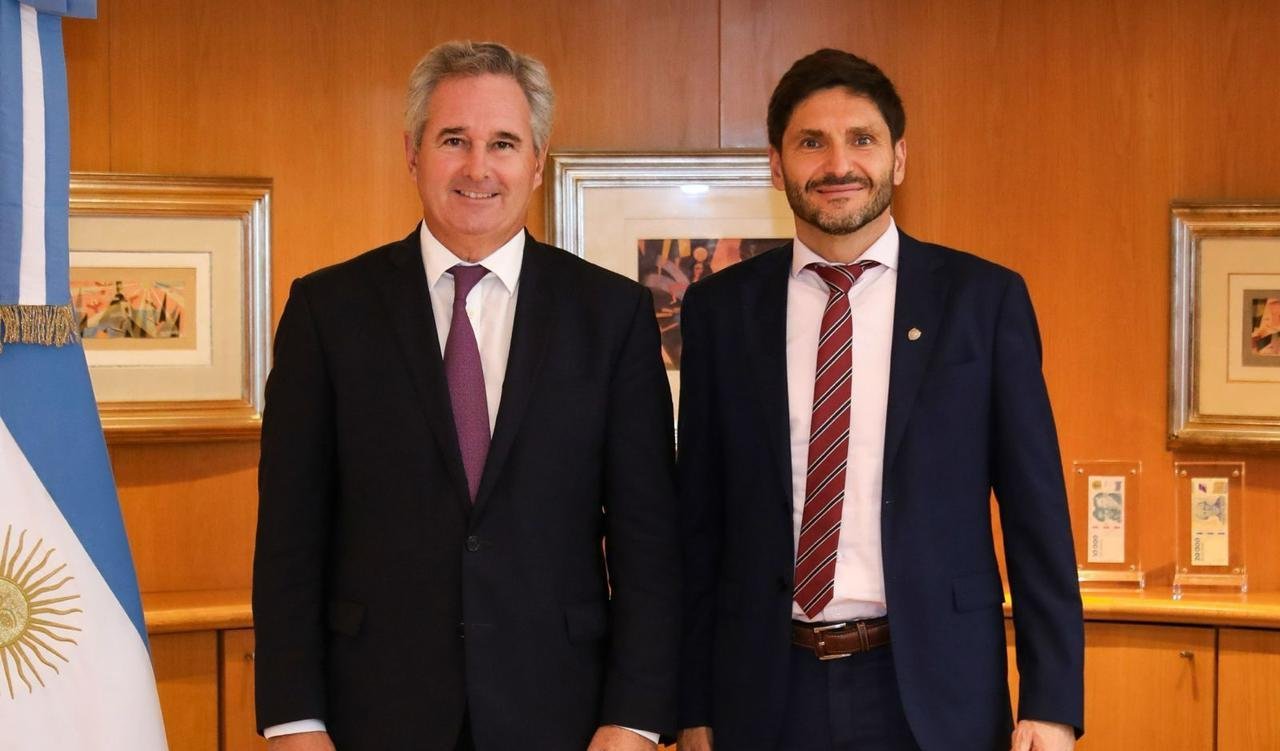
Governor Maximiliano Pullaro, accompanied by Santa Fe’s Minister for Productive Development, Gustavo Puccini, presented the Foreign Minister of the Argentine Republic, Pablo Quirno, with a document to support a review of the status of biodiesel before the European Union – a classification that currently restricts exports to that market from Mercosur.
Also present at the meeting, held at the Foreign Ministry’s headquarters in the Autonomous City of Buenos Aires, were the province’s Secretary for Foreign Trade, Georgina Losada, and the Secretary for International Relations, Claudio Díaz.
Following the meeting, Puccini explained that the governor “presented the Foreign Minister with a dossier containing scientific, technical, economic and production data on what the production and export of biodiesel to the European Union entails for the province of Santa Fe”; and he noted that this data “refutes the EU’s position of considering soya a high-risk input”, which is the reason why imports were restricted.
Key market
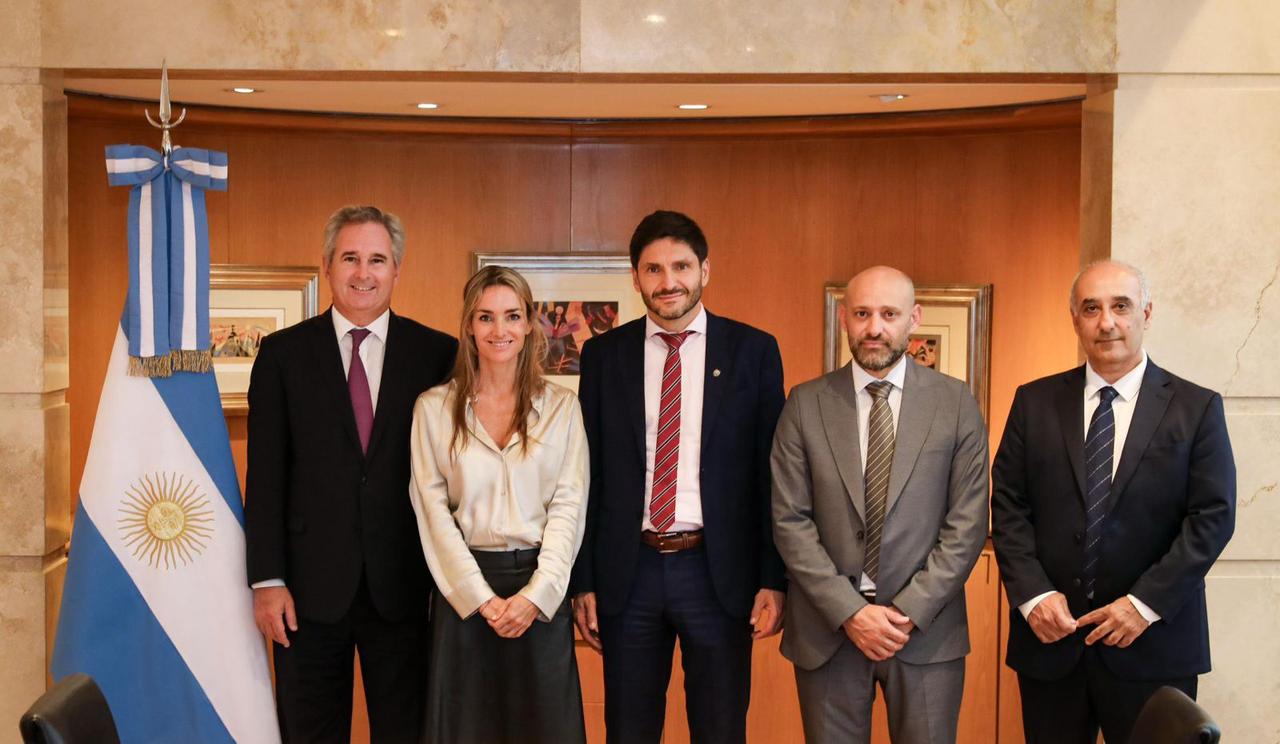
“The Foreign Ministry will be in Brussels next week to provide technical input, and this dossier will be included in that presentation,” said the minister from Santa Fe, who also highlighted the “joint efforts of the national and provincial governments, the Central Region and private sector stakeholders involved in biodiesel production and the agricultural sector”.
“For Santa Fe, the country’s leading biodiesel producer, it is essential to sustain these markets, not only for this product, but also for soya and its derivatives,” said the minister.
In the same vein, Losada described the meeting as “positive” and maintained that the aim of the document is “to demonstrate that the measure adopted by the EU has no scientific or technical basis and constitutes a barrier to trade”; he also pointed out that “it does not reflect the reality of production in the province of Santa Fe”. As he explained, the economic impact could amount to a loss of 390 million dollars.
The document outlines the province’s economic situation, which would be severely affected in terms of its biodiesel exports, and includes data on the economic and employment impact in Santa Fe.
It is worth noting that the issue was raised recently at a meeting of the Central Region’s Productive Cabinet, and this week during a working session with German Ambassador Dieter Lamlé and experts from the German Society for International Cooperation.
The EU report
In early February, the European Commission issued a technical report reviewing the scientific evidence on the expansion of crops for biofuels and the application of the criteria set out in Regulation 2019/807. The Province warns that the European regulation on ‘high-risk ILUC’ (indirect land-use change) goes beyond the specific context of biodiesel and poses a threat to the entire soya value chain. By stigmatising the raw material at source, this regulation could set a precedent which, in the short term, would restrict access to the European market for products such as soya meal, soya oil and soya beans.
Following that report, a consultation period was opened, with a deadline in February, during which the provincial government, alongside business associations, raised concerns about the methodology, the findings and other aspects. It is stated that the findings presented by the EU do not reflect the reality of soya production in Argentina.