The Government of Santa Fe and the Municipality of Rosario welcomed the decision by the US State Department to remove the special Level 2 classification – “Exercise extreme caution” – which had been applied to the city in the south of the province as part of the Travel Advisory for Argentina. With this update, Rosario now falls under the general classification assigned to the country, Level 1: “Exercise normal precautions”, the lowest-risk category recognised by the US State Department.
The change represents international recognition of the sustained improvement in security conditions in the city, resulting from policies implemented by the Government of Santa Fe in coordination with the national government, federal forces, the Municipality of Rosario, the Public Prosecutor’s Office and the Federal Judiciary.
The decision comes a month after the meeting between Governor Maximiliano Pullaro and the US Ambassador to Argentina, Peter Lamelas, during which they discussed the evolution of security indicators in the province, the fight against organised crime and the possibilities for strengthening bilateral cooperation.
A change of course
Commenting on the upgrade to the alert level, Governor Pullaro stated that “this is a very significant recognition of the path we decided to take from the very first day of our administration. We made difficult decisions, changed the way we tackle crime, and stayed the course even when many said it wouldn’t work or that it was doomed to failure”.
“The changes that society asked of us are the ones we are implementing and, little by little, the results speak for themselves. Rosario is emerging from the situation it had been left in and is beginning to be recognised for this transformation,” he said.
The governor added that “this achievement is the result of a public security policy based on control, order and the strengthening of institutions. Having left such a negative indicator behind opens up new opportunities for Rosario and for the whole province. It is good news for tourism, for organising major events, for those considering investing, and for companies looking to set up here. When security improves, so do opportunities for development,” Pullaro emphasised.
Recognition of shared effort
For his part, the mayor of Rosario, Pablo Javkin, said that the decision “sends a very important signal to the world and confirms that the joint effort we have all made is yielding tangible results”.
“For a long time, Rosario made the news because of violence. Today, it is beginning to be recognised for having regained control and for the serious work being carried out to restore peace to the city. This change in classification improves our international image and creates better conditions for welcoming tourists, organising conferences, shows and sporting events, as well as strengthening the confidence of those who wish to invest and create jobs,” he said.
The update to the Travel Advisory is a further sign of the recovery process Rosario is undergoing, following the marked reduction in violence rates recorded over recent months, and represents international backing for the change of direction driven by the security policies implemented in the province.
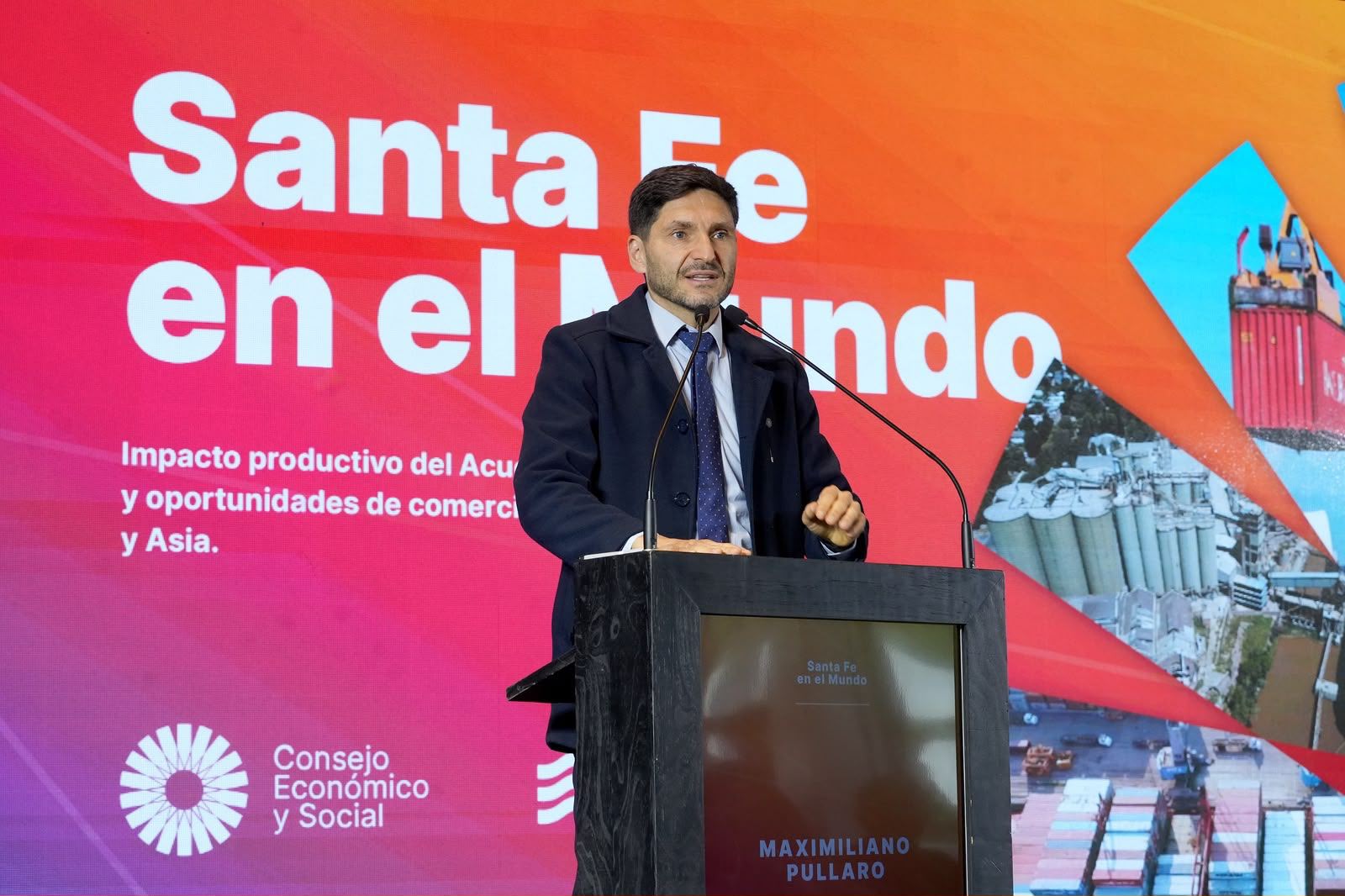
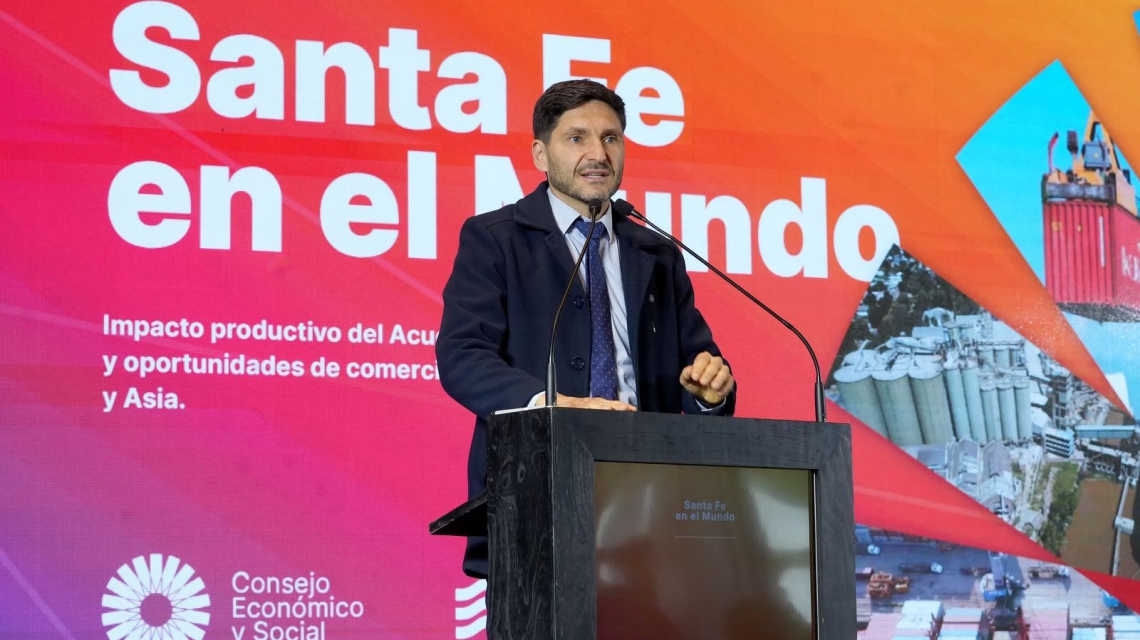
On Thursday, Governor Maximiliano Pullaro presided over the opening in Rosario of the conference ‘Santa Fe in the World: the productive impact of the Mercosur–European Union Agreement and trade opportunities with North America and Asia’, a forum for analysis organised by the Economic and Social Council (CEyS) to assess how the new international landscape can strengthen the province’s productive development and exports.
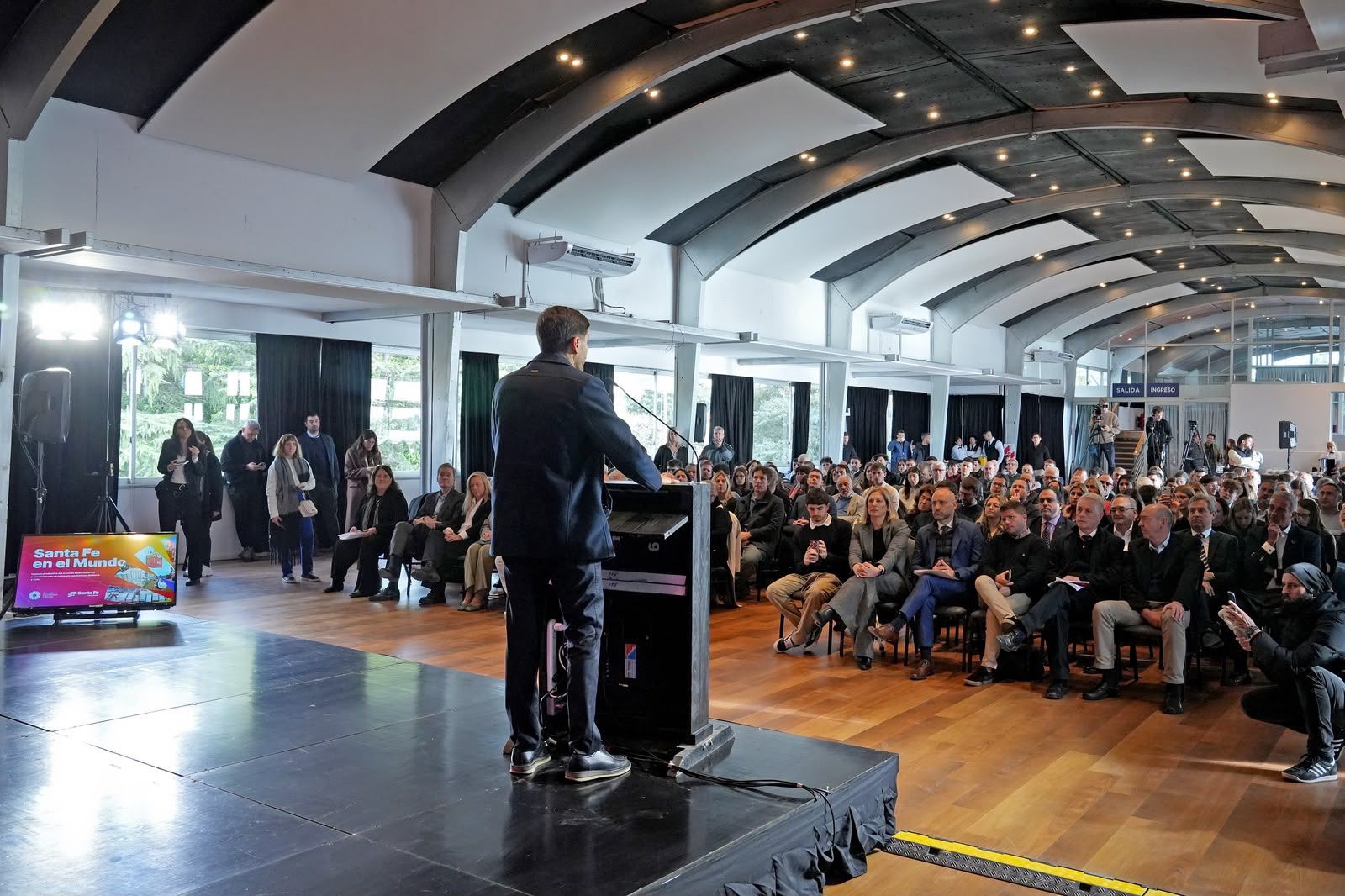
The event, held in the Salón Terrazas at La Fluvial, brought together provincial and national officials, representatives from the business sector, universities and productive institutions to discuss the challenges and opportunities presented by changes in international trade.
During the opening address, Pullaro highlighted the institutional value of the Economic and Social Council and the collaborative work between the state and the private sector. “Today, in national politics, there is a great deal of shouting and recrimination. In Santa Fe, we are demonstrating that it is possible to develop public policies in a different way, based on public-private collaboration,” he stated.
The governor recalled that the CEyS, established by law in 2016, had outlasted changes in government and become firmly established as a state policy. “What will be discussed here is very important, because Santa Fe is the most productive province in the Argentine Republic,” he said.
He also pointed out that, since the start of his term in office, the Provincial Government has been working to consolidate existing markets and open up new outlets for Santa Fe’s produce through long-term policies. In this regard, he highlighted participation in international forums, support for exporting SMEs and investment in infrastructure.
“We have already demonstrated that Santa Fe can reduce public spending, lower taxes and invest in productive infrastructure as never before. Over the last 30 months, we have invested as much as we did in the previous eight years, using the same resources, because we have been able to build a more efficient state,” he stated. He also highlighted investments in roads, energy, gas pipelines, port infrastructure and airports to improve the competitiveness of businesses.
At the end of his speech, Pullaro called for continued collaboration between the State and intermediary institutions: “We have great opportunities and we must build on them together with all the people of Santa Fe, with the private sector taking the lead and the State supporting and underpinning that process,” he said.
The event was attended by Gisela Scaglia, a Member of the National Congress; Juan Cruz Cándido, Secretary-General of the Governor’s Office; and other officials.
Argentina’s leading export province
For his part, the Minister for Productive Development, Gustavo Puccini, highlighted that Santa Fe has established itself as the country’s leading exporting province and emphasised the growth of its logistics and port infrastructure.
“We have indicators that demonstrate the significance of Santa Fe’s economy and the potential of our productive system. In 2025, our ports surpassed New Orleans and Santos in terms of cargo throughput, a figure that reflects the province’s export strength,” he said.
Puccini also maintained that the trade liberalisation promoted by the national government represents “an opportunity rather than a threat”, provided it is accompanied by policies that strengthen SMEs and consolidate value chains. “We must continue to work on coordination between the public and private sectors to gain new markets and sustain the growth of our businesses,” he said.
A new foreign trade scenario
Jorge Dolce, coordinator and executive secretary of the Economic and Social Council, highlighted the significance of the trade agreement between Mercosur and the European Union as one of the central themes of the meeting. “After more than two decades of negotiations, the agreement has already begun to be implemented on a provisional basis. This new landscape expands opportunities for our productive sector and integrates us into a market of around 700 million consumers, a scale that redefines our region’s international integration,” he said.
The event forms part of the Government of Santa Fe’s strategy to consolidate the international integration of its production, expand markets and strengthen the province’s competitiveness. Within this framework, it is complemented by other initiatives to promote foreign trade, such as the Santa Fe Business Forum, aimed at driving a development model based on production, innovation and exports.