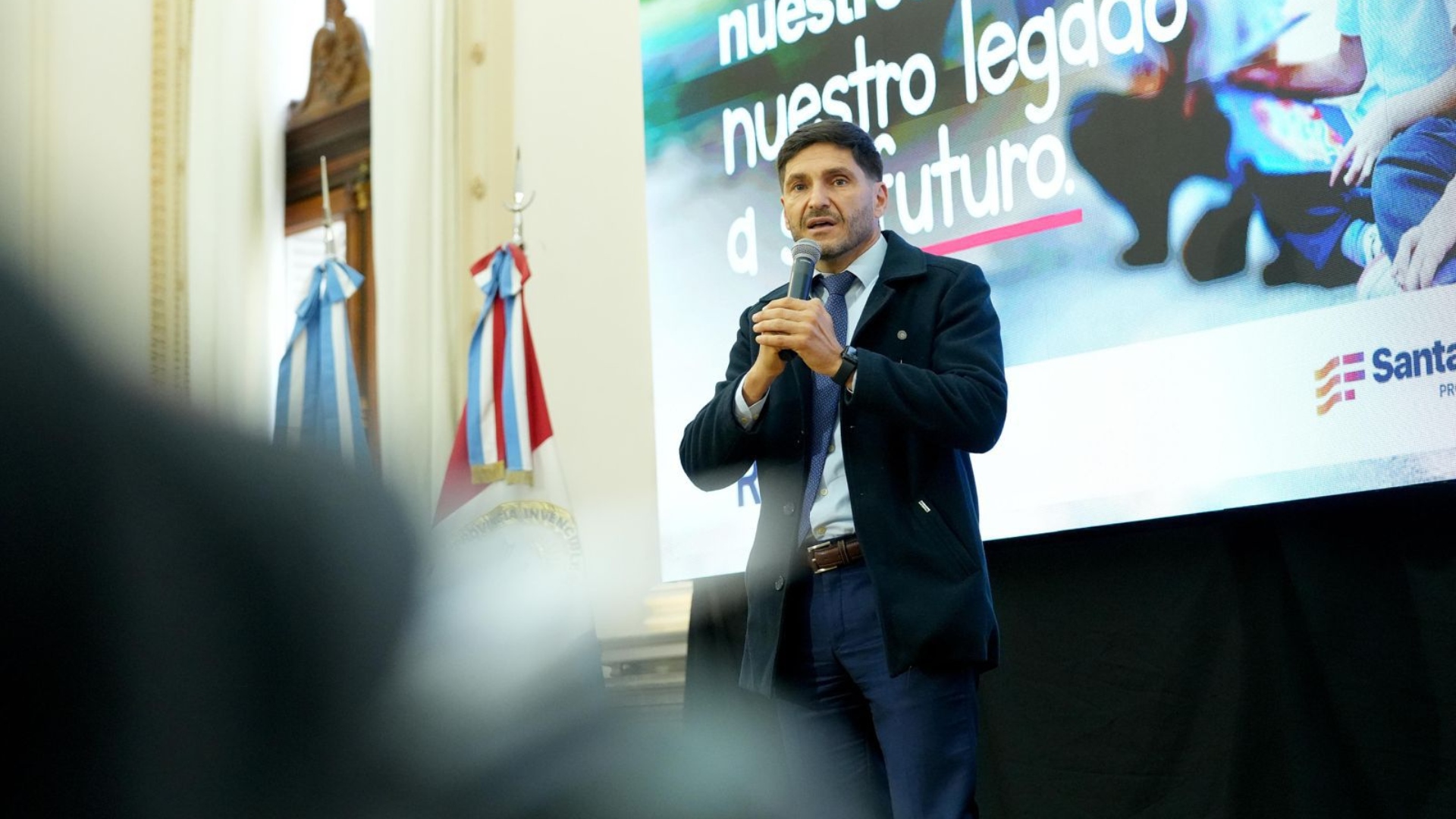
As part of the Santafesino Raíz Literacy Plan, Governor Maximiliano Pullaro and the Minister of Education, José Goity, presented on Monday the results of the second provincial reading assessment carried out among Year 2 pupils in public and private schools across the province.
During the event, held at the Government Headquarters in Rosario, Pullaro emphasised that education is the provincial administration’s top priority. “Santa Fe allocates the most resources to the education system. Almost 30% of the provincial budget is allocated to education,” he stated.
The governor noted that the Raíz Plan has established itself as the cornerstone of Santa Fe’s education policy and maintained that the results obtained confirm the direction taken. “We are building a path that we must follow, where boys and girls are important and learning is fundamental to their growth,” said the governor. “We understood that this path would lead us to a successful outcome, and today we can see the results in terms of literacy,” he added.
He also highlighted how the educational communities had taken ownership of the initiative. “The most important thing is that teachers have taken ownership of the Raíz Plan, and it has ceased to be a government policy to become a national policy,” he said.
The importance of evaluation
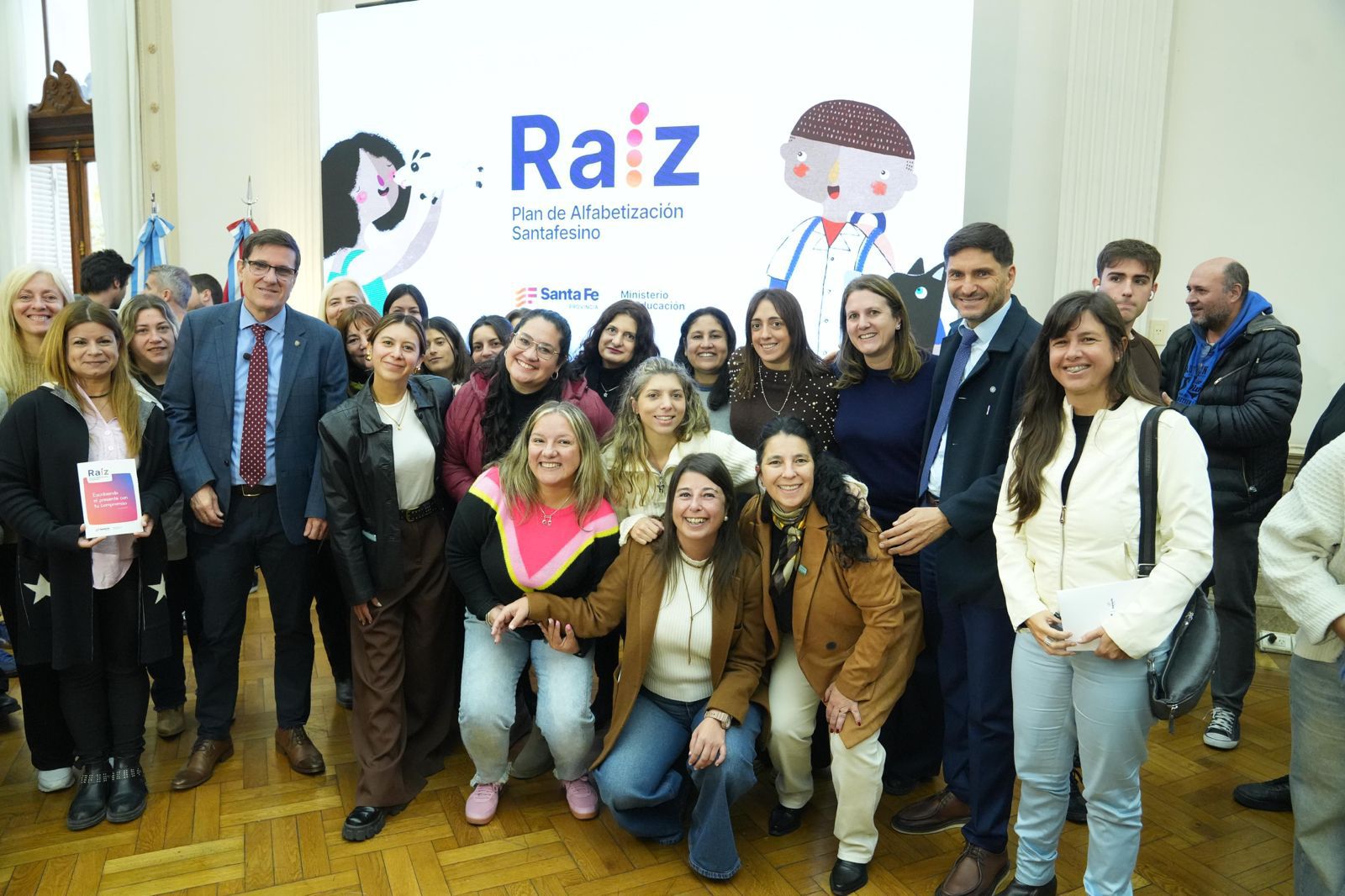
For his part, Goity highlighted that the Raíz Plan was consolidated in 2026 as a comprehensive policy combining teaching methods, teacher training, monitoring of results and personalised support.
Currently, the initiative reaches 162,000 students, involves 9,900 teachers in training and 1,700 educational establishments. Furthermore, 374,000 books have already been distributed this year and more than 900,000 since the programme began in 2024.
The minister explained that 49,000 students took part in the 2025 assessment, representing 97% of the student body and 99.6% of pupils present on the day of the test.
Compared with 2024, the number of students in critical need fell by 10.3%, whilst the number of readers in transition rose by 5.5%. At the same time, the number of pupils who read well or very well increased by 22.6%. This trend was also reflected in the different reader profiles. Pre-readers fell by 22.9%; those at Beginner 1 level fell by 7.1% and those at Beginner 2 level fell by 5.5%. In contrast, intermediate readers increased by 16.9% and fluent readers recorded a rise of 48.3%.
Another key indicator was reading speed. Goity explained that the provincial average rose from 43.2 correct words per minute in 2024 to 50.3 in 2025.
The minister also highlighted the direct link between school attendance and academic performance. Among students with more than 20 absences, 46.9% were at critical reading levels. In contrast, among those with fewer than 20 absences, that percentage fell to 26%.
From an external perspective, Agustina Lenzi, Director of Government Relations at Argentinos por la Educación, praised Santa Fe’s decision to publish the results of the assessments and use them to guide improvements in education policy. “Having access to information, making commitments and being accountable for progress is a crucial step,” she said.
Learning in the classroom
The deputy headteacher of School No. 1399 in Roldán, Jorgelina Rodríguez, highlighted the progress observed at her school. She recalled that in 2025 they had two literacy support teachers working with 30 pupils identified as having reading difficulties. “This year those hours were reduced because the number of children needing support has also fallen. Today we have just one teacher working with only four pupils. It is clear evidence that the children are learning,” she said.
In the same vein, teacher Sonia Crica, from School No. 1322 in Rosario, praised the continuity of the Raíz Plan and highlighted that the sustained monitoring of pupils’ educational progress had helped to strengthen literacy processes.
“The experience was very enriching because it allowed us to closely support each pupil’s journey,” she concluded.